
The Timeless Craft of Wood Staircases

Wood staircases are more than mere functional elements within a home; they are the architectural hinge point of the house. Serving as both one of the most useful and necessary parts of a home, a staircase also often stands as the single largest interior architectural feature. It defines movement, organizes space, and makes a statement about craftsmanship and design. Whether modest or grand, the staircase anchors the home’s aesthetic, guiding both the eye and the inhabitant through its levels with purpose and beauty. They are testaments to craftsmanship, tradition, and the enduring beauty of natural materials.
Throughout history, staircases have served as both practical necessities and grand architectural statements, their designs evolving alongside the homes and manors that housed them. Today, finished wood staircases continue to embody both artistry and utility, offering warmth, elegance, and an invitation to ascend.
A Historical Perspective on Wood Staircases
Staircases have long been central to home design, evolving in form and function through the centuries. While early structures relied on rudimentary materials, wood quickly emerged as a preferred medium, offering both strength and sculptural potential.
The Evolution of Domestic Wood Staircases
-
Early Forms & Simplicity – In centuries past, staircases in homes were simple, straight flights crafted from local timber. These early structures, often seen in cottages and farmhouses, were built with practicality in mind rather than ornamentation. A notable example of such early domestic staircases can be found in the preserved timber-framed homes of England’s Tudor period, where wooden staircases were typically steep, narrow, and integrated into the timber framework of the house itself. These designs laid the foundation for more refined staircase construction in later centuries.
-
The Georgian Era & Refinement – By the 18th century, wood staircases in manors took on an air of grandeur. The introduction of the cantilevered staircase—a remarkable feat of engineering—allowed treads to appear as though floating, with minimal visible support. Architects such as Robert Adam pioneered the integration of sweeping staircases into grand residences, using intricate woodwork to enhance visual appeal.
-
The Victorian Flourish – The 19th century brought a flourish of embellishment. Elaborate carvings, turned balusters, and sweeping quarter-turn or dog-legged staircases became defining features of well-appointed homes. Wood was shaped into spirals and curves, showcasing the height of craftsmanship, with influences from designers like Owen Jones, who championed ornate detailing and decorative elements in staircase design.
-
The Craftsman Movement & Modern Simplicity – As the 20th century arrived, the elaborate ornamentation of the Victorian era gave way to the simpler, more functional designs of the Arts and Crafts movement. Craftsman-style staircases, popularized by architects like Gustav Stickley, emphasized clean lines, sturdy wood construction, and honest joinery. In contemporary homes, staircases continue to evolve, with modernist and minimalist designs embracing open risers, floating treads, and a seamless integration into architectural spaces.
Throughout these eras, staircases transformed from mere means of ascent to striking architectural focal points, shaping the interiors of homes with both form and function.
Styles of Wood Staircases
Wood staircases take many forms, each lending a unique character to a home’s design. Understanding these styles, particularly with historical terminology, helps to appreciate their distinct roles. For more information on staircase construction, visit our Anatomy of a Staircase page.
Straight Flights
A classic and straightforward design, these staircases travel directly from one floor to the next, embodying simplicity and efficiency.


Quarter-Turn (L Shaped) Stairs
These staircases make a 90-degree turn, often incorporating wedge-shaped winders to create a seamless transition. This design maximizes space while adding visual intrigue.
Half-Space (U Shaped) Stairs
Common in traditional homes, this style features two flights running parallel with a central landing. This practical arrangement provides both elegance and efficiency.
.jpg)

Spiral Stairs
Spiral staircases wind tightly around a central column, making them ideal for compact spaces where efficiency is key. Historically found in townhouses and compact dwellings, these staircases provide a functional yet visually striking solution for vertical movement.
Circular Stairs
Unlike spiral stairs, circular staircases curve more gently and lack a central support, creating a grander, more open feel. They are often seen in classical architecture, where their sweeping arcs add elegance and a sense of flow to interior spaces.
.jpg)
_JPG.jpg)
Cantilevered Stairs
With treads anchored only on one side, these staircases exude modern refinement while drawing inspiration from historical advancements in staircase engineering.
Customization of Wood Staircases
Every home tells a story, and a well-crafted staircase should reflect the unique character of that story. At Chronicle Custom Woodworks, we offer a wide range of customization options to ensure your staircase is as individual as the home it serves.
-
Design and Style: Whether your preference leans toward the timeless elegance of a traditional staircase or the clean lines of a more contemporary form, our team works closely with you to develop a design that aligns with both your personal taste and the architectural character of your home. From straight runs to open-risers and grand curves, each form is thoughtfully considered for beauty, flow, and proportion. Explore our Design Compendium for creative ideas.
-
Wood Selection: The species of wood is foundational to the look and feel of your staircase and home. We offer a wide selection of domestic and exotic hardwoods - including Oak, Walnut, Maple, Hickory, Medieval Walnut, and more - chosen not only for their durability, but for their distinctive grain patterns and hues. We are pleased to provide guidance in selecting a wood that complements your space and wears beautifully over time.
-
Finish Options: From rich stains to neutral tones that showcase the natural grain, our finish options allow for subtle expression or bold contrast. We carefully test and match finishes to ensure harmony with other millwork, flooring, or furniture within your home.
-
Details and Accents: Balusters, handrails, newel posts, and skirtboards - each element offers an opportunity for refinement. Whether you prefer metal spindles, wrought iron, turned balusters, or minimalist metalwork, these details can elevate a staircase from functional to exceptional. Detailed mouldings, curved railings, or custom motifs can also be incorporated upon request.
-
Integration with Surroundings: A staircase does not exist in isolation. We take pride in ensuring it integrates seamlessly with your home’s layout, sightlines, and natural light. Custom-built landings, wall paneling, and complementary trim can further tie the staircase into the broader aesthetic of your space.
Through every stage - from consultation and design to fabrication and installation - we invite you to be part of the creative process. The result is not merely a staircase, but a lasting expression of your home’s story, shaped in wood.

Traditional Craftsmanship in Staircase Construction
The art of crafting a fine wood staircase has been refined over centuries, relying on meticulous techniques and masterful joinery. Unlike mass-produced staircases of today, historical wooden staircases were shaped by the hands of skilled artisans, combining function with extraordinary beauty. The process of construction involved not just structural considerations but also an intricate understanding of materials and form.
Handcrafted Joinery & Construction Methods
Traditional staircases were built using time-honored joinery methods, designed for both strength and longevity. Unlike modern staircases that often rely on metal fasteners, historical staircases depended on wood-to-wood joinery for structural integrity.
-
Mortise and Tenon Joints – One of the strongest woodworking techniques, this joinery method involved inserting a tenon (a projecting piece of wood) into a precisely cut mortise (a corresponding cavity), creating a durable connection used for handrails and balusters.
-
Dovetail Joints – This method was commonly used in the construction of stair treads and risers, ensuring that each step was locked securely in place without the need for nails or glue.
-
Pegged Connections – Wooden pegs were driven into joints to reinforce them, allowing for natural wood movement without compromising the staircase’s stability.
-
Wedged Treads – In many historic staircases, treads were set into stringers using wooden wedges, which were carefully hammered in to create an exceptionally tight and secure fit.
Today, advances in adhesive and fastening technology has made these traditional joinery methods uncommon and expensive luxuries.
Material Selection & Timber Craftsmanship
The selection of wood played a vital role in the durability and aesthetics of traditional staircases. Craftsmen would carefully evaluate timber based on grain, strength, and workability.
-
Oak, White or Red – Favored for its exceptional hardness and resistance to wear, oak was often used for stair treads and balustrades in grand homes and manors.
-
Mahogany – This richly colored hardwood was a staple in 18th- and 19th-century staircases, particularly in refined Georgian and Victorian homes. Today it is rare due to overharvesting.
-
Walnut – Known for its deep tones and intricate grain patterns, walnut staircases were admired for their elegance and character.
-
Pine – While softer than hardwoods, pine was widely used in simpler homes and cottages due to its affordability and ease of carving.
Ornamental Detailing & Artistic Flourishes
Beyond structural integrity, traditional wood staircases were often adorned with elaborate details that showcased the artistry of master woodworkers. Many of these embellishments were meticulously hand-carved, each staircase reflecting the individuality of its maker and the architectural style of the home.
-
Hand-Carved Newel Posts – The grand centerpiece of many staircases, newel posts were often adorned with elaborate carvings, from acanthus leaves to classical motifs.
-
Turned Balusters – Using a lathe, craftsmen shaped intricate balusters, each one unique and contributing to the staircase’s aesthetic rhythm.
-
Scrollwork & Marquetry – Some of the finest staircases featured inlaid patterns or ornamental scrollwork, enhancing their artistic appeal.
-
Volute & Wreath Handrails – These gracefully curved handrail designs added elegance to the staircase’s overall form, particularly in sweeping circular staircases.
Modern tastes have generally led to a more simple and refined experience, however the timeless appeal of traditional forms still captivates many.
The Role of the Master Stair Builder
Historically, staircases were often crafted on-site by master stair builders, who would design, measure, and hand-cut each component to fit the home precisely. These artisans worked closely with architects and homeowners, ensuring that the staircase was both a structural masterpiece and a defining feature of the residence.
The process of crafting a staircase could take weeks or even months, as every joint was meticulously shaped, every tread carefully fitted, and every detail hand-finished. The result was a staircase that was not only structurally sound but also a lasting work of art—one that could endure generations of use while maintaining its elegance and character.
Even today, those who seek the finest in wood staircase craftsmanship look to these historical methods, blending old-world artistry with modern innovations to create staircases that stand as both functional necessities and architectural treasures.
The construction of a fine wood staircase has long been a labor of precision and artistry. Historical methods relied heavily on skilled joinery, ensuring both stability and beauty.
-
Handcrafted Joinery – Techniques such as mortise and tenon, dovetail joints, and pegged connections provided exceptional strength without reliance on nails or screws.
-
Solid Timber Selection – Craftsmen sourced the finest hardwoods, carefully considering grain direction and density to enhance both durability and visual appeal.
-
Carving & Inlay Work – Decorative flourishes, such as hand-carved newel posts or marquetry inlays, were hallmarks of master artisanship in historical staircases.
Modern Construction Methods for Wood Staircases
Today’s wood staircases blend traditional craftsmanship with innovative building techniques, utilizing advanced materials, precision manufacturing, and time-honored joinery methods to achieve strength, durability, and elegance.
Curving Wood for Stair Stringers
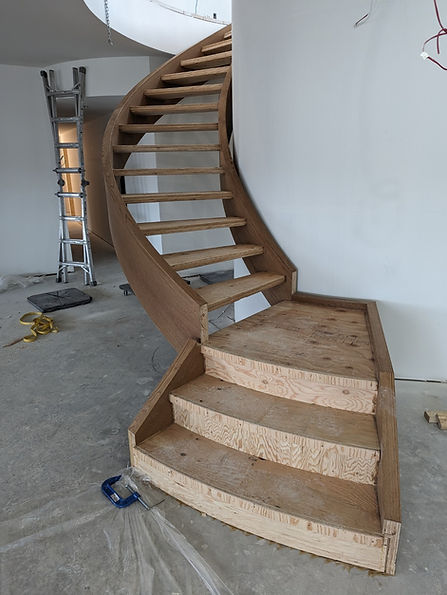
Curved staircases require precise craftsmanship and specialized techniques to bend wood into sweeping, elegant shapes. Some of the most effective methods include:
-
Laminated Bending – Thin strips of wood, known as laminations, are glued together and clamped around a form to create a durable, curved stringer with minimal spring-back.
-
Steam Bending – Solid wood is softened using steam, allowing it to be carefully shaped around a form. This technique has been used for centuries to craft elegant, flowing staircases.
-
Kerf Cutting – By making a series of closely spaced cuts on the backside of the wood, it becomes flexible enough to bend into shape, though this method is less commonly used for high-end staircases.


Joinery & Fastening Techniques
Modern wood staircases utilize a combination of traditional joinery and innovative fastening techniques to enhance both structural integrity and ease of installation.
-
Housed Stringers – Treads and risers fit into precisely cut grooves within the stringers, ensuring a snug and secure fit without visible fasteners.
-
Dowel & Glue Joints – Precision-cut dowels are used to strengthen connections between treads, risers, and stringers, creating a nearly seamless finish.
-
Screw & Plug Fastening – For additional reinforcement, screws are countersunk and covered with matching wood plugs, maintaining a clean aesthetic while adding durability.
-
Floating Tread Supports – In modern cantilevered staircases, treads are anchored into hidden steel supports, creating the illusion of floating steps while ensuring structural stability.
Typical Construction Process
The construction of a high-quality wood staircase follows a meticulous process to ensure precision, beauty, and longevity:
-
Design & Planning – Architects and craftsmen work together to design a staircase that fits the home’s layout and aesthetic, selecting wood species, joinery methods, and finishes.
-
Material Selection & Preparation – Wood is carefully chosen based on strength and appearance. For curved staircases, boards may be laminated or steam-bent in preparation for shaping.
-
Site Measurement: If the stairs are for a new house, site measurements can be taken as soon as the flooring system is fully framed. Early onsite access guarantees that input from the stair builder as to structural requirements are met, and any integration issues resolved. For renovations, site measurements can happen anytime before production begins. Each staircase is built specifically to the requirements of the building into which it is going.
-
Cutting & Shaping Components – Stringers, treads, risers, and balusters are precisely cut using CNC milling machines or traditional hand tools, depending on the desired level of craftsmanship.
-
Assembly & Joinery – Each component is meticulously fitted together using housed joints, mortise-and-tenon connections, or floating tread supports.
-
Finishing & Installation – The staircase is sanded, stained, and sealed to enhance its natural beauty and protect against wear before being carefully installed in the home.
By combining old-world artistry with modern advancements, today’s wood staircases maintain the elegance of tradition while embracing the precision and efficiency of contemporary methods.
Typical production timelines for a custom staircase vary on design and scale, but generally range from about 6 to 12 weeks.
Maintenance & Longevity of Wood Staircases
A well-crafted wood staircase is built to endure, provided it receives proper care. However, the type of finish applied plays a crucial role in its longevity and ease of maintenance. Traditional wood finishes, such as natural oils, waxes, and shellacs, were designed to penetrate the wood and enhance its natural beauty while allowing for easy restoration. These finishes age gracefully, permitting simple reapplication without the need for extensive sanding or stripping.
In contrast, many modern polyurethane-based finishes create a hard, plastic-like layer on the surface of the wood. While initially providing a durable seal, these finishes are prone to cracking, yellowing, and peeling over time, particularly in high-traffic areas. When they fail, they require complete removal and refinishing—a labor-intensive process that can compromise the wood’s original character.
For those who value longevity and ease of maintenance, oil-based finishes like Odie’s Oil offer a superior alternative. Unlike polyurethane, Odie’s Oil deeply penetrates the wood fibers, strengthening the material from within while leaving no brittle surface layer. This finish is water-resistant, enhances the wood’s natural patina, and allows for simple touch-ups rather than full refinishing. By choosing an oil-based finish, homeowners can ensure their staircase remains a lasting investment, preserving the craftsmanship and natural beauty of fine woodwork for generations to come. Here are key considerations for preserving its beauty:
-
Routine Cleaning – Dust and debris can wear down finishes over time. Regular sweeping and occasional polishing maintain the staircase’s luster.
-
Protective Finishes – A quality finish like Odie's Oil shields the wood from moisture and wear, prolonging its life.
-
Structural Inspections – Ensuring balusters remain secure and treads free from excessive creaking prevents minor issues from developing into costly repairs. If the staircase is in need of attention, the sooner the issue is addressed, the safer and more functional the staircase will remain.
A Legacy of Craftsmanship
From the stately halls of historic manors to the inviting warmth of modern homes, wood staircases have stood as enduring symbols of fine craftsmanship. They connect levels, but more importantly, they connect eras—blending tradition with innovation, function with artistry. Whether a simple winder staircase or a grand cantilevered marvel, a well-made wood staircase invites movement, tells a story, and stands the test of time.
For those seeking to bring this time-honored craft into their own homes, the journey begins with choosing quality materials, expert craftsmanship, and a design that speaks to the home’s character. In every step, history and artistry converge, creating not just a staircase, but a legacy in wood. Chronicle Custom Woodworks has been building local custom wood staircases in Saskatoon, Saskatchewan since 2016, and we would be honoured and privileged to have the opportunity of turning your dreams into reality.
